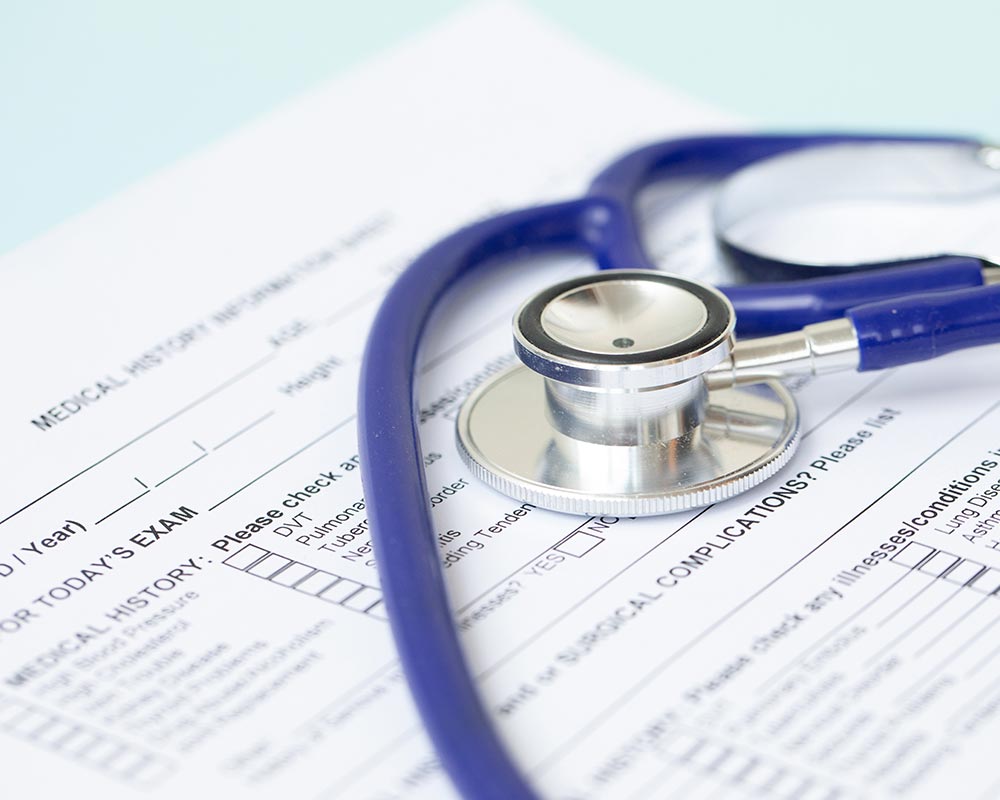
When medical emergencies happen, information can be the missing link between life and death. Paramedics can't search your home for paperwork. Hospitals can't guess who has power of attorney. Families may not know where you keep insurance cards, essential medical history or important directives for medical care.
That gap is exactly why Elaine Hoyt created ELDR – Emergency Legal Document Repository. Based in Rockford and now entering its second year, ELDR offers a secure, always-available space to store the documents that matter most when every minute counts.
"There's nothing else in the marketplace that is doing this," says Hoyt.
Hoyt spent her career as a computer and electrical engineer in the aerospace industry, coming out of retirement to launch ELDR last October. The move wasn't sparked by a flash of inspiration but rather a near-death experience. After a bout of surgeries, Hoyt contracted spinal meningitis, a deadly infection that causes inflammation of the brain and spinal cord. After she collapsed at home, the situation turned critical. A concerned neighbor happened to call at exactly the right moment.
"Somehow, she saw a light that usually isn't on and decided to check in," says Hoyt. "Somehow, the phone went to FaceTime. I had cut my head when I fell, and when she saw the blood on my face she called 911."
Things grew more complicated once Hoyt reached the hospital. Because she lived alone, staff had no clear next-of-kin to contact or consult. It took a winding chain of calls to finally reach Hoyt's brother – first through a cousin in Freeport, then another in Florida – while she remained unable to speak for herself during a critical stretch of care.
"The doctors told me afterward that I only had hours left to live," recalls Hoyt.
After weeks in the hospital, Hoyt came out determined to build a service that gives people fast, reliable access to the documents they need in an emergency.
A lifelong aviation enthusiast and general aviation pilot, Hoyt was left unable to fly after recovery. She sold her airplane and used the proceeds to build ELDR from the ground up. The system took three months of planning, nine months of development and close collaboration with specialists willing to take on the heavy security demands that the project required.
"I believe that the 'Guy Upstairs' arranged for my life to be saved," says Hoyt. "I believe He put it on my heart to start this company."
What ELDR Does
ELDR lets users upload and organize a wide range of essential files: medical histories, imaging results, prescriptions, insurance cards, disability-related documents and other materials that might be needed in a crisis. Users have the ability to create their own folders, sort their content however they like and choose which items can be accessed in an emergency.
Once information is uploaded, it can be shared with caregivers, sent directly to medical professionals or accessed through a unique ID number that subscribers carry on a wallet card, bracelet or smartphone. That number is the key that allows emergency staff to retrieve only the documents the user has marked as shareable.
"It's all about having this information available any time that you're the one in need," says Hoyt.
The system also benefits people navigating disability claims, where agencies often require extensive medical and legal documentation. With ELDR, everything lives in one place, ready to be sent wherever it's requested.
Beyond Medical Records
ELDR isn't limited to medical records; it also gives legal and financial documents a secure home, Hoyt says. The company's website, eldrforyou.com, includes resources to help customers create the documents they need.
"We've provided a list of attorneys on our website," says Hoyt. "There are also medical resources that you can use to research how to create medical documents. We're currently working on a partnership with an organization that rates hospitals, which will help anyone who is looking for one."
Hoyt sees potential for workplaces too. ELDR is currently making inroads with HR departments to offer the service as part of employee benefit packages. Hoyt hopes employees and their families can use the system at a discounted rate.
"This gives people one place to collate and save documents so they're at their fingertips," Hoyt says.
Membership costs $75 per year plus a $25 startup fee, bringing the total to $100 for an individual in the first year.
"The monthly payments are about the price of a McDonald's Happy Meal," Hoyt adds.
Security at the Core
Because the service handles some of the most sensitive documents a person can own, security is the backbone of ELDR's design. The platform follows HIPAA-compliant standards and uses industry-leading encryption powered by AWS cloud technology. Hoyt invests equally in development and cybersecurity, employing a private team with federal-level experience to test and probe the system every quarter. To stymie viruses, uploads are limited to certain formats. Every document is locked behind multiple layers of protection. Users remain in full control of who can see their information and when.
"If I can't promise people that their data is secure, I don't have a product," says Hoyt.
A Global Vision
ELDR is also expanding its reach for travelers. Hoyt is working with U.S. State Department officials to ensure foreign hospitals can access records when subscribers need emergency care overseas.
"If you're in a foreign hospital, you want those doctors to have your medical information as quickly as possible," says Hoyt. "If you're a family member, you want to be contacted. You want to know what's going on."
Hoyt is also in the process of creating bracelets for veterans that would include their branch and years of service.
"I'd also like to approach Medicare with this," says Hoyt. "A lot of people look at what we're doing and say, 'Wow. This is going to do well.' The true value is what we can do for people."
A Mission Bigger Than Business
As ELDR heads into its second year, Hoyt remains focused on getting the company's services into as many hands as possible. She is currently in the process of creating videos to guide customers through the process of creating and storing important documents. Satisfied with her nest egg from a career in aerospace, Hoyt plans to donate a significant portion of ELDR's profits to charity.
"I have 18 different charities on the website who will benefit, categorized by medical, disaster, food, faith and more," she says. "Our goal is to donate 25% of everything we make to these charities."
Hoyt sees ELDR as her second chance put to work. Instead of enjoying her retirement exploring the skies, she uses the experience that nearly ended her life to fuel a service that helps others protect theirs. As she sees it, that's the real miracle.
"I really believe that this is going to find a home," Hoyt says. "It's not for me. It's all for the Guy Upstairs."